
Severity Resources & Threat Breakdown
The Severity Resources & Threat Breakdown report provides visualization broken by Severity and Threat Category for resources. Most inner group shows the severity; middle circle reflect the assets and severity; the outer circle show the Threat category.
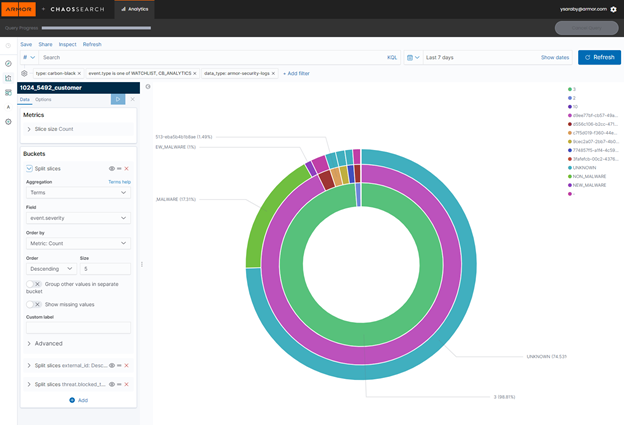
-
In Nexus, hover over Threat Management

-
Click Log Search.
-
Then click Log Search tab on the top of the page.
-
Wait for the SSO.
-
-
Click on Visualizations
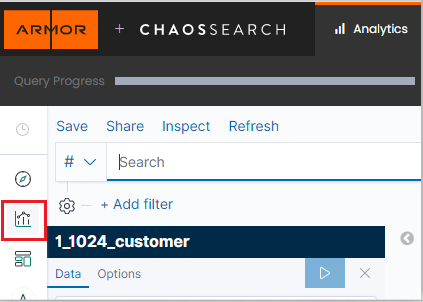
-
Click the Create new visualization button.

-
In the New Visualization pop up, select the Pie visualization option.
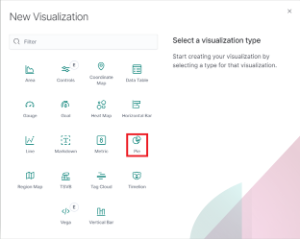
-
Choose a source.
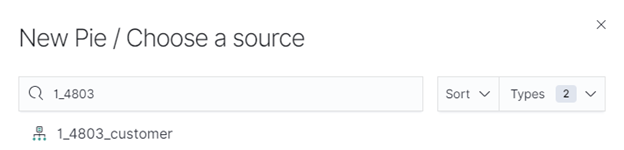
-
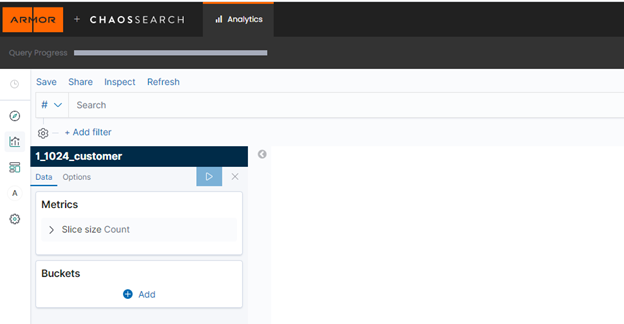
Log Search will refresh to display the query screen. From here, the visualization can be configured.
-
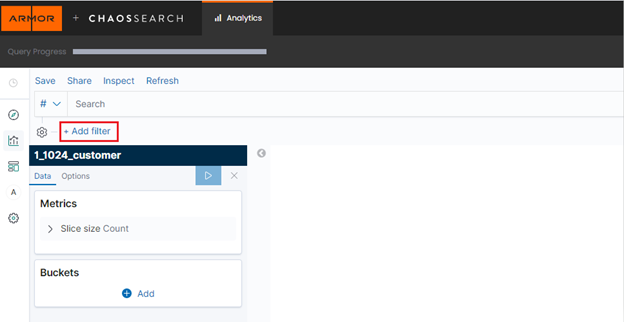
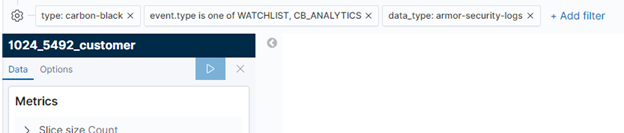
Click Add filter.
-
Populate the following filters (Case sensitive):
Field
Operator
Value
Note
type
is
carbon-black
event.type
is one of
WATCHLIST, CB_ANALYTICS
Data_type
Is
armor-security-logs
event.severity
Is one of
8, 9, 10
Optional if you want to filter higher severities
-
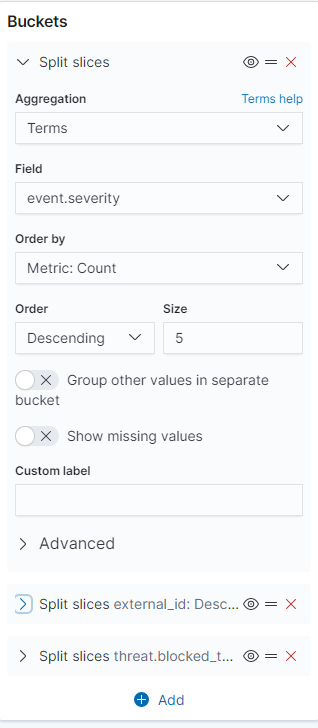
Two buckets are needed to configure this visualization. Under Buckets, click the Add button, making sure to select split slices.
-
In the Aggregation drop down, select Terms.
-
In the Field box, enter "event.severity" or search for it.
-
Order by, Order and Size should all remain with their default values. Properly configured, the first bucket will look like the screenshot below:
-
To add the second bucket, click the Add button underneath Buckets, making sure to select split slices.
-
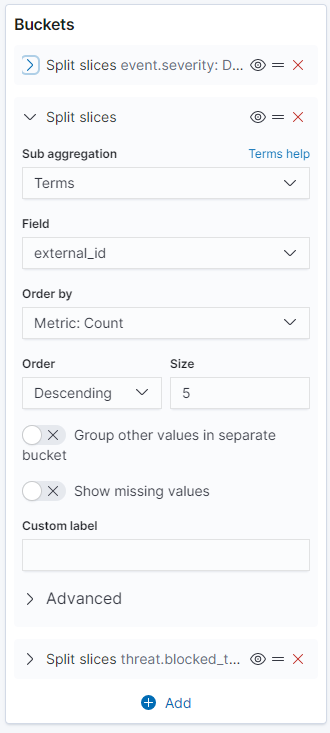
In the Sub aggregation dropdown, select Terms.
-
In the Field, enter "external_id" to select it. (External Id is the same as CoreInstanceId)
-
Order by, Order and Size will be set to default. Properly configured, the second bucket will look like the screenshot below:
-
To add the second bucket, click the Add button underneath Buckets, making sure to select split slices.
-
In the Sub aggregation dropdown, select Terms.
-
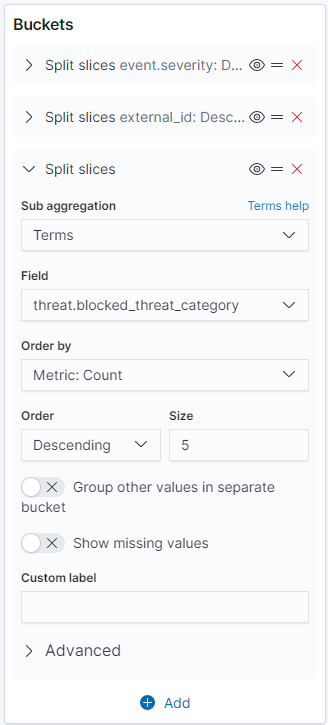
In the Field, enter "threat.blocked_threat_category" to select it.
-
Order by, Order and Size will be set to default. Properly configured, the second bucket will look like the screenshot below:
-
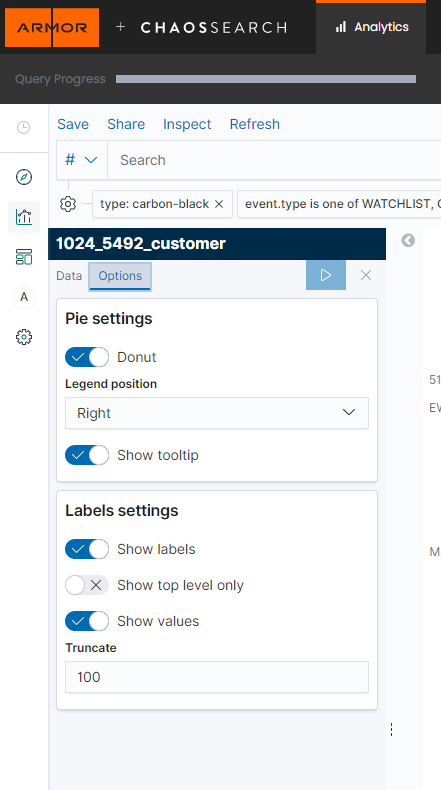
Optional step if you like to display labels, click Options tab:
-
When both buckets are configured, click the Apply Changes button.
-
Set the date range for the visualization.
-
If the range encompasses more than one report, an additional filter with the report id can be added.

-
-
Save the visualization by clicking Save in the top left of the screen.
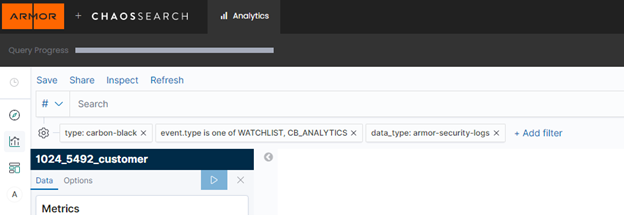
Users can view previous visualizations by clicking Visualizations and selecting the desired visualization from the list.